The initiative has been launched to preserve Taj Ganj’s rich craft traditions through enhancing craftsperson skills and better market access.
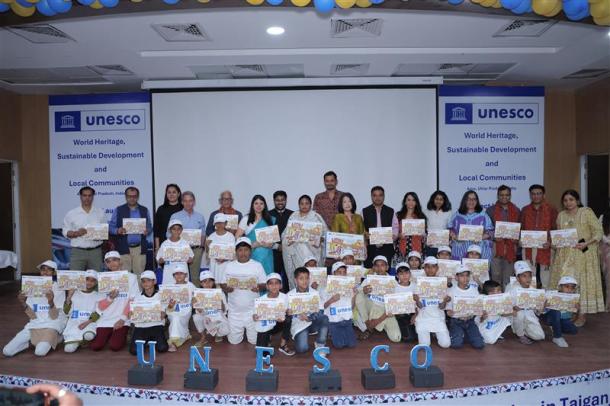
The launch event for the “World Heritage, Sustainable Development and Local Communities” project was held in Taj Ganj, Agra on 4-5 April 2025, aiming to empower artisans, promote cultural awareness and community-led tourism.
Supported by the Korean Funds-in-Trust, this initiative aims to bridge the gap between World Heritage and local communities by fostering inclusive growth, empowering artisans and strengthening heritage driven sustainable development, with a focus on the region's Parchin Kari (stone inlay craft) specialists.
"A model for focused sustainable development and heritage management serves as a guardian for the protection of cultural heritage." said Hemlata Divakar, Mayor of the Agra Municipal Corporation.
The launch event brought together key figures, including Ms. Hemlata Divakar, Mayor of Agra; Mr. Aravind Mallappa Bangari, District Magistrate of Agra District; Mr. Ankit Khandelwal, Municipal Commissioner of Agra; and representatives from UNESCO, local artisans’ groups, and cultural heritage experts.
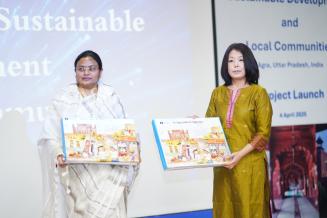
During the occasion, UNESCO launched “Heritage Wonders of Tajganj, Agra”, a bilingual colouring book designed to instil a sense of cultural pride among local children by introducing them to Tajganj’s history and craftsmanship.
"Heritage is not just about preserving the past but also about empowering communities in the present and ensuring a sustainable future." said Junhi Han, Chief of Culture, UNESCO Regional Office for South Asia.
This is in line with UNESCO’s commitment to community-centred heritage conservation, especially focusing on the World Heritage Committee’s adoption of “Communities” as a key strategic objective in 2007.
Within the broader UNESCO mandate, the focus of this project remains on promoting heritage preservation while enhancing artisans’ skills and diversifying their products through established market linkages.
Following the launch, a round table brought together experts ranging in expertise – from crafts to design, and entrepreneurship to heritage conservation.
Key insights included the urgent need to reimagine the future of traditional artforms, while participants emphasized that while India is rich in craftsmanship, we often fail to recognize the people behind the products.
This project aims to fill this gap and create a model for people-centric sustainable development and heritage management with community empowerment, ensuring the safeguarding of cultural heritage for future generations.

With changing aspirations and limited income opportunities, younger generations are turning away from crafts their families once mastered. This demonstrates the importance of marketing, storytelling and innovation in ensuring artisans are not just seen as preservers of heritage but as entrepreneurs and changemakers.
The panel of experts highlighted challenges such as the lack of product diversification, limited access to quality raw materials, health risk due to unsafe work conditions and the need for better market linkages.
To keep these traditions alive, we must build an ecosystem where heritage meets aspiration, and artisans can thrive with dignity, creativity, and opportunity.