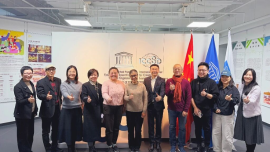
On February 4, the UNESCO International Centre for Creativity and Sustainable Development under the auspices of UNESCO (ICCSD) convened a progress meeting for the Fifth "ICH as Fashion" Workshop and International Training Program. Dr. Yang Bixing, Head of the Culture Unit of the UNESCO East Asia Regional Office, paid her first visit to the ICCSD and attended the meeting. A total of 11 experts, scholars, and industry representatives from universities and institutions—including the International Training Centre for Intangible Cultural Heritage in the Asia-Pacific Region under the auspices of UNESCO (CRIHAP), Renmin University of China, Nankai University, Beijing Institute of Fashion Technology, the Red Dot Design Museum, and TEDA Cultural & Creative Industries—gathered to provide insights and recommendations on the implementation of the program.


As a two-year flagship capacity-building initiative under UNESCO, Intangible Heritage Meets Fashion closely aligns with the principles of both the Convention for the Safeguarding of the Intangible Cultural Heritage and the Convention on the Protection and Promotion of the Diversity of Cultural Expressions. The program has successfully delivered three previous workshops, with the fourth session scheduled to take place in Chengdu.
The current meeting focused on advancing the implementation of the fifth workshop, with in-depth discussions centered on thematic positioning, curriculum design, implementation mechanisms, and outcomes transformation. Participants agreed that the workshop should leverage Beijing's dual strengths as an international center for scientific and technological innovation and a national cultural hub, aiming to build an international training program that combines academic rigor with practical applicability.


Experts at the meeting unanimously recognized the program as a vivid practical example of synergy between the two UNESCO conventions in the digital environment. They suggested that future phases should place greater emphasis on hands-on training in the application of artificial intelligence to intangible heritage fashion transformation, alongside brand development and industry linkage.
By strengthening talent cultivation and resource integration, and using technology empowerment as a key driver, the program is expected to explore innovative pathways for the living transmission of intangible cultural heritage. The goal is to enable deeper integration between traditional heritage and contemporary fashion, while providing solid practical support for the inclusion of culture in the post-2030 sustainable development agenda.